



Introduction
Choosing a city for your next office is a strategic decision shaped by three fundamentals: occupancy costs, access to talent, and connectivity. When one falls short, the impact extends well beyond the workplace, affecting hiring, productivity, and long-term operating efficiency.
That balance is why Pune is best for office space for a growing number of enterprises and GCCs. In H1 2026, the city accounted for 15% of India's net office absorption, matching Hyderabad and ranking second only to Bengaluru, according to Cushman & Wakefield.
This guide examines eight reasons businesses are choosing Pune, the key business districts to consider, and the office formats that best align with different team structures and growth plans.
What Makes Pune Stand Out Among India's Office Markets?
Pune offers a large technology and GCC occupier base, deep engineering talent, lower Grade A rents than Mumbai and Bengaluru, and direct expressway access to Mumbai, India's financial capital.
The demand numbers back this up. Knight Frank reports Pune's highest-ever half-year office leasing in H1 2026, at 6.6 million sq ft, up 29% year on year. GCCs, flex operators, and IT/ITeS firms are driving that growth, all expanding at once rather than one sector carrying the market alone. For the wider national picture, see Incuspaze's India office market report for 2026.
Why Businesses Are Choosing Pune
Four forces sit behind that growth: talent, cost, connectivity and a mature flexible office market. The eight reasons below break each one down.
1. A Fast-Growing Base of Global Capability Centres
Pune has become one of India's leading GCC destinations, with BFSI, engineering, manufacturing, and technology firms all setting up centres here. In H1 2026, the city recorded 3.01 million sq ft of GCC leasing, the second-highest among Indian cities after Bengaluru, per Cushman & Wakefield.
For a company entering Pune, this matters in practical terms. GCC-experienced talent, established service vendors, and Grade A campuses are already in place, and Pune is on Incuspaze's list of top cities in India for GCC offices.
2. Deep Roots in IT and Technology Services
Pune's technology backbone runs through Rajiv Gandhi Infotech Park in Hinjewadi, the large IT campuses in Kharadi, and Magarpatta City in Hadapsar. Established employers with major Pune operations include Infosys, TCS, Wipro, Cognizant, and Pune-headquartered Persistent Systems.
Around these campuses, a dense layer of SaaS, fintech, and product startups has also grown. For a new office, this ecosystem provides faster access to partners, clients, and experienced hires than starting from scratch in a less mature market.
3. A Steady Pipeline of Engineering and Business Graduates
Pune is one of India's most established education hubs, anchored by institutions such as Savitribai Phule Pune University, COEP Technological University, Symbiosis International University, and MIT World Peace University.
The yearly flow of engineering, management, and research graduates lets companies hire at scale while still filling specialist roles. Pune also draws professionals from other states, widening the hiring pool well beyond local graduates.
4. Office Rents Well Below Mumbai and Bengaluru
Knight Frank puts Pune's average office rent at INR 82 per sq ft per month in H1 2026, against INR 130 in Mumbai and INR 102 in Bengaluru. For a mid-size or large team, this gap means lower cost per seat. You can use the saved budget for hiring and operations instead of rent. A managed office can cut upfront spend further still by removing fit-out capex entirely.
5. Shorter Journeys to Mumbai and Across the City
Pune's link to Mumbai has improved with the Mumbai-Pune Expressway Missing Link, which opened in May 2026 and cuts expressway travel time by up to 30 minutes. The Navi Mumbai International Airport, operational since December 2025, now gives Pune businesses a closer, less congested international gateway than Mumbai's existing airport.
Within the city, the phased rollout of Pune Metro Line 3 between Hinjewadi and Shivajinagar, along with the Pune Ring Road (western section due by late 2026 or 2027), is set to cut internal travel times. Together, these projects mean shorter commutes for employees and easier travel for clients and leadership teams alike.
6. One of India's Most Active Flexible Office Markets
Flexible and managed offices are now a mainstream choice in Pune; both GCCs and growing teams use them. Flexible workspace operators accounted for 45% of Pune's office leasing in Q2 2026, the largest share of any occupier group, according to Cushman & Wakefield.
For a company entering the city, that means faster move-in and the option to add or reduce seats as headcount changes.
Incuspaze's managed office spaces in Pune are a ready option for enterprises and GCCs looking to move quickly. Incuspaze's Q2 2026 flex space industry report explains why flexible offices are gaining share across India.
7. Quality of Life That Helps Teams Stay
Pune's milder climate, lower living costs than Mumbai, and easy weekend getaways to Lonavala and Sinhagad make it easier to relocate senior staff. They also make it easier to retain them once they are here.
Traffic on some corridors, particularly Hinjewadi, remains a real concern, which is exactly why the choice of office location within Pune matters as much as the choice of Pune itself.
8. Demand Spread Across Several Industries
Pune's office growth isn't only about IT. Pune also recorded 4.2 million sq ft of industrial leasing in H1 2026, led by engineering, manufacturing and automobile companies, according to Cushman & Wakefield. Automotive and engineering firms like Tata Motors, Bajaj Auto, and Mercedes-Benz India anchor Pune's manufacturing belts, including Pimpri-Chinchwad and Chakan, alongside a growing BFSI presence.
Cushman & Wakefield's Q2 2026 data shows that, after flex operators, IT-BPM (20% of leasing) and BFSI (10%) firms were the largest sources of Pune's office demand. This spread matters because it creates steadier demand overall and gives companies access to a wider pool of vendors and cross-functional talent.
Pune's Leading Business Districts and Who They Suit
Pune's office demand isn't concentrated in one part of the city. It's spread across several business districts, each suited to a different kind of team.
| Business District | Key Micro-Markets | What It Offers | Incuspaze Centres |
|---|---|---|---|
| CBD and Off-CBD | Bund Garden Road, Shivajinagar, Camp, Deccan | Central address for client-facing firms, BFSI, and professional services | None (nearest: Shanti One, Yerawada) |
| SBD East | Kalyani Nagar, Yerawada, Viman Nagar, Mundhwa, Hadapsar | Close to the airport, established parks like Magarpatta, mix of enterprise and mid-size occupiers | Shanti One (Yerawada), Lalwani Icon, Lalwani House and Finswell (Viman Nagar), Kohinoor Business Tower (Mundhwa) |
| PBD East | Kharadi | Large campus-style developments popular with GCCs and enterprise occupiers | The Strand (Kharadi) |
| SBD West | Baner, Balewadi, Aundh | Quick access to the Mumbai-Pune highway, popular with startups, consulting, and mid-size firms | Balaji Business Centre, Amar Business Zone and Spectra (Baner) |
| PBD West | Hinjewadi, Wakad | Pune's largest IT corridor with large contiguous floor plates | White Square (Hinjewadi Road), Indialand Global Tech Park (Hinjewadi Phase 1) |
A firm hiring heavily from Pune's western suburbs will find PBD West easier to staff, while a client-facing BFSI or professional services firm may prefer a central CBD address.
Knight Frank's H1 2026 data shows PBD West more than doubled its share of Pune's office leasing to 33%, while SBD East rose to 26% from 19% a year earlier.
For teams located in south-west Pune, Incuspaze's Symphony IT Park centre in Nanded City is also worth shortlisting.
Which Office Format Fits a Pune Expansion?
Once Pune is the chosen city, the next decision is which office format best fits the business and its office space requirements. Companies evaluating office space in Pune can choose between managed offices, coworking and conventional leases.
| Format | Best Suited For | Set-Up Speed | Upfront Cost | Flexibility |
|---|---|---|---|---|
| Managed Office | Enterprises and GCCs that need a private, branded office | Fast: the operator handles design and fit-out | Low, no fit-out capex | Scale seats within a centre or across cities |
| Coworking | Startups, small teams, and project teams | Immediate | Minimal | Monthly or short-term plans |
| Conventional Lease | Large occupiers that want full control | Slow: fit-out can take several months | High: fit-out plus security deposit | Long lock-in periods |
For most mid-size and large Pune expansions, a managed model with a private office space in Pune works best. It gives a branded office without fit-out capex or a long set-up time.
Coworking office spaces in Pune suit small or project teams, while conventional leases fit very large occupiers who want full control for a long tenure.
Set Up Your Pune Office With Incuspaze
Pune's strength comes from several advantages working together. Strong GCC and technology demand, a deep talent pool, lower rents than Mumbai and Bengaluru, better connectivity, and a fast-maturing flexible office market all make the city stand out.
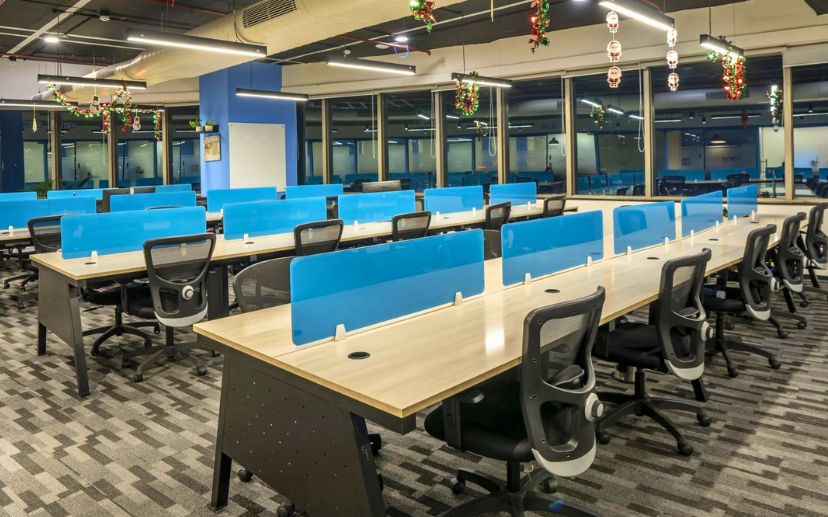
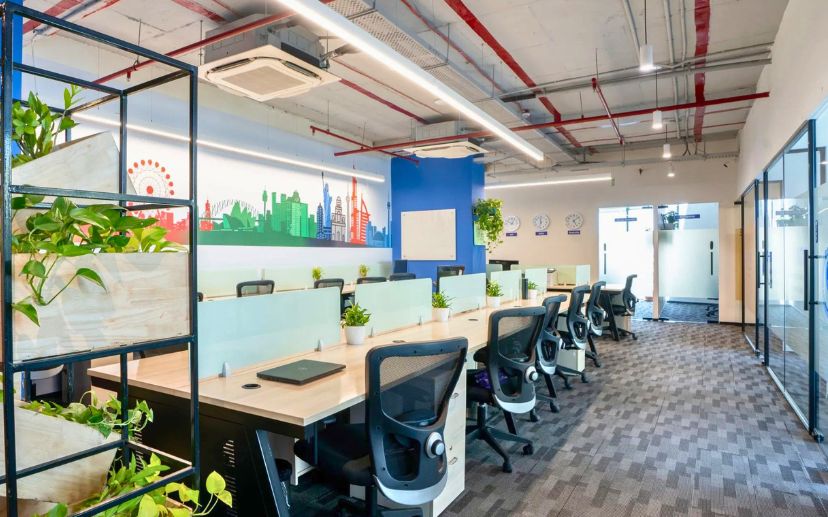
Incuspaze operates 12 managed office centres across Baner, Hinjewadi, Yerawada, Viman Nagar, Kharadi, Mundhwa, and Nanded City. Each centre offers custom layouts, a Zero CapEx model, and flexible terms designed for enterprises and GCCs.
If Pune is on your shortlist, schedule a visit to an Incuspaze centre and explore the managed office spaces in Pune.