




Introduction
Setting up a new office is one of the most consequential decisions a business leader makes. Yet most enterprises begin without a proper new office requirements list, and the gaps show up after the lease is signed. A poorly chosen location, an undersized server room, or a lease with no exit flexibility can cost months of productivity and significant unplanned capital.
India's office market scaled unprecedented highs with gross leasing activity of 83.3 million sq. ft for 2025 , which means thousands of enterprises are actively making this transition. Most of them discover gaps in their planning only after they've signed.
This guide covers a complete new office requirements list, from location and infrastructure to IT, compliance, and workspace operations, so you know exactly what to verify before committing. Use this as your checklist before any workspace decision.
What Is a New Office Requirements List?
A new office requirements list is a structured checklist of everything a business must plan, procure, and set up before occupying a new workspace, covering physical space, technology, compliance, and day-to-day operations.
For teams of 30 seats or more, skipping a formal list is not just risky; it is expensive. An unplanned move can set a team back by weeks, trigger unexpected costs on fit-outs, and delay hiring until the infrastructure is actually ready. The list exists so none of that happens.
Office Space Requirements to Evaluate Before You Sign a Lease
Before you look at anything inside the office, evaluate the building itself and the deal attached to it. Here's what matters:
Location and Connectivity
Proximity to transport infrastructure affects hiring more than most real estate teams acknowledge. Enterprise offices in established commercial corridors attract talent partly because people can actually get there. In India, this means locations like Whitefield and Outer Ring Road (Bengaluru), OMR (Chennai), Gurugram sectors (Delhi NCR), and Powai or Andheri East (Mumbai), attract talent partly because people can actually get there. For large teams, a difficult commute becomes a retention problem faster than you'd expect.
Space Size and Seat Density
The Indian market standard for Grade A traditional office spaces is typically 80 to 100 sq. ft. per person for open-plan layouts. The calculation sounds simple, but teams often forget to account for 12 to 18 months of headcount growth. If you're hiring fast, the office you size for today may need a relocation within a year. That's exactly the outcome the planning process is supposed to prevent. Hybrid teams also need fewer fixed desks but considerably more meeting rooms and collaboration spaces per head.
Building Grade and Infrastructure
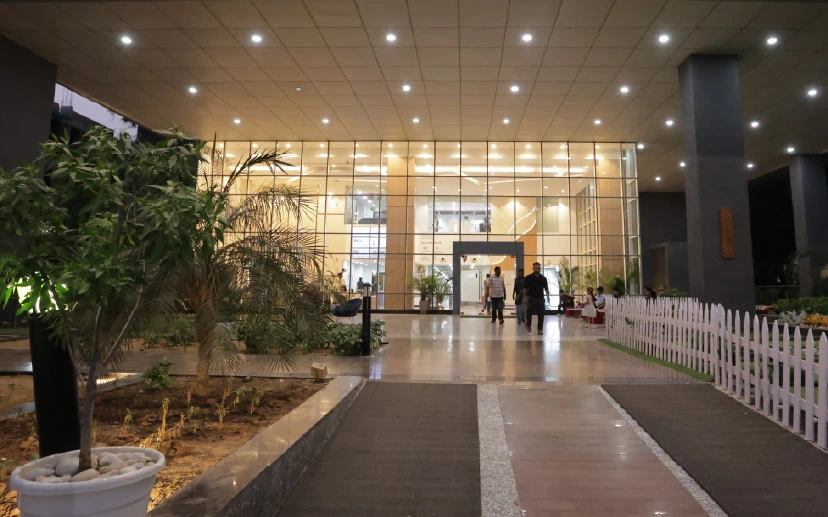
Grade A buildings offer international-standard HVAC, power backup, high-speed lifts, and fire safety compliance. GCCs and MNCs typically grade A as a baseline, not because of preference but because their global workplace standards and client-facing requirements demand it. Grade B buildings may look cost-effective upfront, but the operational gaps show up quickly: unreliable power backup, limited lift capacity during peak hours, and HVAC systems that cannot maintain consistent temperatures across floors.
Lease Terms and Flexibility
Lock-in periods of 5 to 7 years are standard in traditional leases. For a business whose headcount or strategy can shift significantly in that window, that level of commitment. Managed office solutions typically offer 12 to 36 month agreements instead, with options to upsize without a full renegotiation.
New Office Setup Checklist for Furniture and Workstation Essentials
The physical workspace layer is where a lot of enterprise fit-outs either succeed or quietly fail. Get this right from the start.
Ergonomic Workstations and Seating
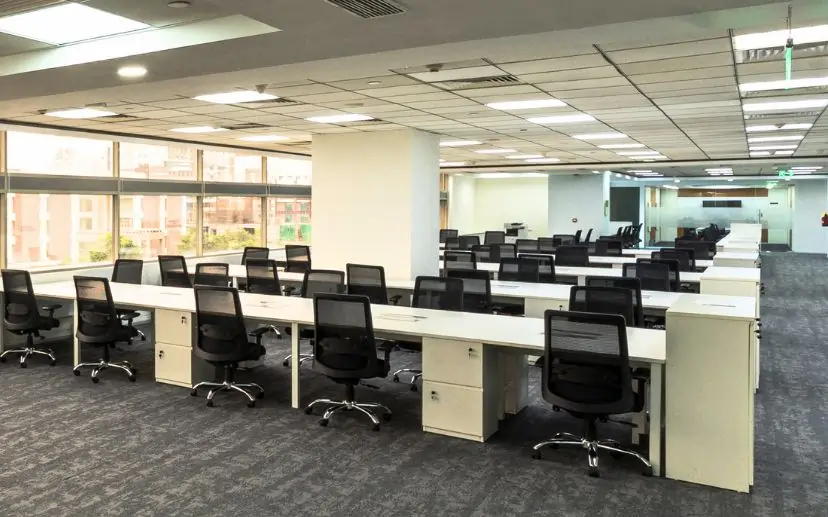
Adjustable desks and ergonomic chairs are no longer a luxury category; they are the baseline for any enterprise-grade setup. Poor ergonomics show up in sick days and performance over time. Enterprise-grade managed offices typically include ergonomic furniture as a standard fit-out component, which removes the procurement burden from the occupier entirely.
Meeting Rooms and Collaboration Zones
You need a range here: small 4-person huddle rooms, standard 8 to 12 person conference rooms, and at least one boardroom for 20-plus-person requirements. Add informal breakout areas and phone booths for focus work. Hybrid teams doing deep work alongside team calls need both, often at the same time.
Reception and Common Areas
For client-facing businesses, the reception is the first physical brand impression. For client-facing businesses, the reception is the first physical brand impression, so invest in a professional front desk, visitor seating, and branded signage. The cafeteria and pantry are standard expectations in Grade A enterprise offices across India, not perks.
IT and Technology Requirements for a New Office
A meticulously planned IT infrastructure is paramount. Whether you're setting up a new office or upgrading your existing one, a well-planned infrastructure ensures the workspace operates efficiently, supports collaboration, and adapts to future business growth.
High-Speed Internet and Network Infrastructure
Enterprise offices need dedicated leased lines with guaranteed SLAs, not shared broadband. Plan for redundant ISP connections for business continuity, full Wi-Fi access point coverage, and VLAN segmentation that separates guest, corporate, and server traffic. Calculate the required bandwidth based on the number of employees and the nature of online activities, and consider a backup internet connection to ensure operations continue during outages.
Server Room and IT Infrastructure Setup
A physical server room needs temperature control, UPS power backup, rack installations, and restricted access. For cloud-first organisations, even a minimal on-premise setup still needs these basics. For enterprises moving into managed offices , the IT infrastructure setup is often handled end-to-end by the workspace provider, which cuts setup time significantly.
Smart Access Control and Security Systems
Smartphone-based access control, biometric entry, CCTV, and visitor management systems are now standard in Grade A managed campuses. Enterprise offices increasingly need IoT-integrated access systems that log entry and exit for compliance and security audits, not just physical security.
Audio-Visual and Communication Equipment
Meeting rooms need display screens or projectors, video conferencing cameras, microphones, and full integration with Microsoft Teams or Zoom. Smart room scheduling linked to calendar software is a baseline expectation. Without it, meeting room conflicts become a daily friction point.
Compliance and Safety Requirements for Office Setup in India
Compliance is the section most enterprises leave to the last minute, and the one that causes the most delays once the lease is signed. India has specific legal requirements that are not optional.
Fire Safety and Building Compliance
National Building Code (NBC) requirements for commercial offices cover fire exits, extinguisher placement, smoke detectors, and emergency lighting. Grade A buildings are built to these standards, but tenants must still verify compliance before occupation. Don't assume the building certificate covers your floor.
Electrical and Power Backup Requirements
An inadequate power supply is one of the most common and costly oversights in enterprise office moves. Verify UPS systems, diesel generator backup, and adequate electrical points per workstation before signing anything. Grade A commercial buildings in India typically provide 100% power backup for tenants. Confirm this contractually.
Health, Safety, and Accessibility Standards
Ventilation standards, natural lighting requirements, and washroom ratios per headcount are governed by the National Building Code and local municipal bylaws. Accessibility provisions for employees with disabilities fall under the Rights of Persons with Disabilities Act, 2016. These aren't administrative checkboxes. They affect occupancy approvals and employee experience directly.

How Managed Office Spaces Simplify the New Office Requirements List
Managing every item on this checklist independently requires significant internal resources running in parallel: a real estate team, an IT team, a facilities team, and a procurement function, all coordinated across a compressed timeline.
The managed office model consolidates that. The workspace provider handles location search, fit-out, IT infrastructure, furniture, facilities management, and day-one operations under a single agreement. Less coordination overhead, faster setup, no capex upfront.
Managed office space from Incuspaze gives enterprises a single point of accountability for all of it. With 50+ locations across 18+ cities, 4+ million sq. ft. under management, Cost+ transparent pricing, and a 45-day standard delivery, Incuspaze handles the checklist so your team doesn't have to.
Submit your workspace requirement today, and Incuspaze's enterprise team will respond within 24 hours.