



With rising real estate costs, the need for operational agility and an evolving hybrid work culture has led companies to think about their workspace strategy. Nowadays, long-term lease agreements and high upfront investments are not preferred by many organisations.
Leadership management is re-evaluating how office spaces support productivity, scalability, and cost control. This shift has brought managed offices into focus, positioning them as a better alternative to traditional office setups.
What Is Managed Office Space?
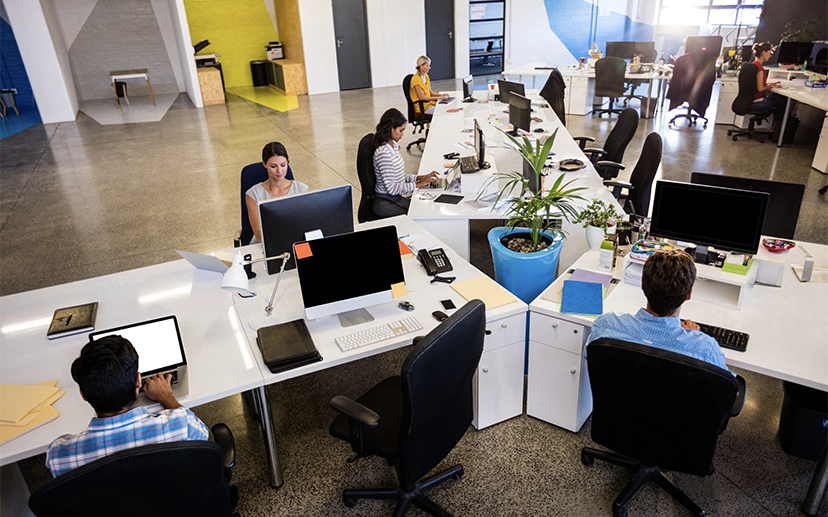
Managed office space is a fully equipped workspace managed by a professional workspace provider. These spaces come ready with ergonomic furniture, advanced technology infrastructure, high-speed internet, meeting and conference rooms, reception services, pantry and café areas, housekeeping, security, parking facilities, and comfortable breakout zones.
The provider handles day-to-day operations from reception services to facility management, allowing businesses to focus on their core activities rather than other administrative duties or tasks. This model is suitable for companies that want to leverage flexibility, privacy, security, and speed without managing office infrastructure and operational activities.
What Is a Traditional Office?
A traditional office is a space that a company leases or owns for long-term use. The business manages everything, including interior design, furnishing, meeting rooms, IT, utilities, and maintenance.
This office space setup gives full control but also requires a higher upfront investment and ongoing management effort. Traditional offices are often chosen by established companies that prioritise long-term ownership over flexibility.
Managed Office vs Traditional Office: Key Differences
Both office models serve different business needs. The differences become easy to understand when evaluated across operational and strategic factors.
Lease Flexibility
Managed offices offer shorter lease terms that give flexibility for companies to scale up or down easily. Traditional offices typically require long-term commitments, often spanning five to ten years, making it harder to scale or enter into new markets.
Setup and Maintenance
In managed offices, setup and ongoing maintenance are handled by the third-party office space provider. This eliminates coordination with multiple vendors, unlike traditional offices that require businesses to manage interiors, repairs, and facilities, adding internal workload and administrative time.
Cost and Overheads
Managed offices have predictable monthly pricing structures that include rent, utilities, and services. Traditional offices involve upfront capital for deposits and ongoing variable costs, which can complicate budgeting and cash flow planning.
Scalability
Scaling in a managed office is simple, as additional space or locations can be leased or rented quickly for an expansion plan. New offices can also be set up seamlessly in other cities, enabling smooth multi-city expansion. In contrast, traditional offices require negotiation, relocation, or new leases, often resulting in delays and higher costs during expansion phases.
Control and Customisation
Traditional offices provide full control over design and usage. Managed offices also allow customization but within predefined frameworks. This balance suits businesses that want branding and control without full operational responsibility.
Pros and Cons of Managed vs Traditional Offices
Managed offices reduce operational burden and offer flexibility, optimal costs, and faster move-in. They are well-suited for businesses focused on agility, growth, or distributed teams working in hybrid environments. Traditional offices provide full ownership and long-term stability but require higher upfront investment, a lease agreement, and a lot of ongoing operational and administrative time.
It is suitable for organisations with fixed space requirements and long-term location strategies with complete control. The choice depends on how much control a business needs versus how much operational involvement it is willing to manage.
Why Are Businesses Shifting Toward Managed Offices?
Many businesses are transitioning to managed office spaces as a comprehensive business support ecosystem to stay competitive in uncertain market conditions. Hybrid work models have reduced the need for permanent, large-scale office space. Managed offices allow companies to adjust space usage without financial burden.
Rising real estate and infrastructure costs also play a role, as managed offices spread expenses into predictable monthly payments. Leadership teams increasingly value the ability to focus on core business rather than office administration. For growing companies, managed offices offer a faster way for expansion across cities without long-term commitments.
Choosing Between Managed and Traditional Offices
Managed and traditional offices serve different purposes and have different strategic priorities. Managed offices emphasise flexibility, scalability, and operational ease, making them suitable for dynamic businesses with changing needs. Traditional offices focus on full control and long-term ownership, which suits organisations that value fixed assets.
Ultimately, the right office space choice depends on company size, growth plans, and budget strategy. Incuspaze is a trusted premium provider of Managed office spaces , offering fully serviced, customised workspaces across India for businesses seeking flexibility without operational complexity.

FAQs on Managed and Traditional Offices
Choosing the right office model requires understanding how each option aligns with your business goals, operational priorities, and growth plans.
Are managed offices fully equipped with furniture and IT support?
Yes, managed offices come fully equipped with ergonomic furniture, high-speed internet, tech-enabled infrastructure, utilities, and IT support. The provider handles all setup and ongoing technical maintenance, allowing businesses to move in quickly and operate without managing infrastructure or coordinating with multiple vendors.
Are managed offices only for startups and small teams?
Not at all. Managed offices are ideal for businesses of all sizes: startups, small teams, and large enterprises. They offer flexible, fully equipped workspaces that support growth, multi-city expansion, and project-based teams without the hassles of traditional office management.
Can I customise branding and layout in a managed office?
Yes, managed offices allow customisation of branding, layouts, floor plans, and meeting rooms within a predefined agreement. Businesses can design spaces according to their team structure and brand identity while the provider manages infrastructure and operations, balancing control with convenience.
What should I consider before choosing a managed vs traditional office?
Consider your growth plans, budget flexibility, need for operational control, lease commitment comfort, scalability requirements, and internal administrative capacity. Managed offices are ideal for dynamic businesses that need flexibility, whereas traditional offices are better suited for organisations that prioritise long-term ownership and full control.