


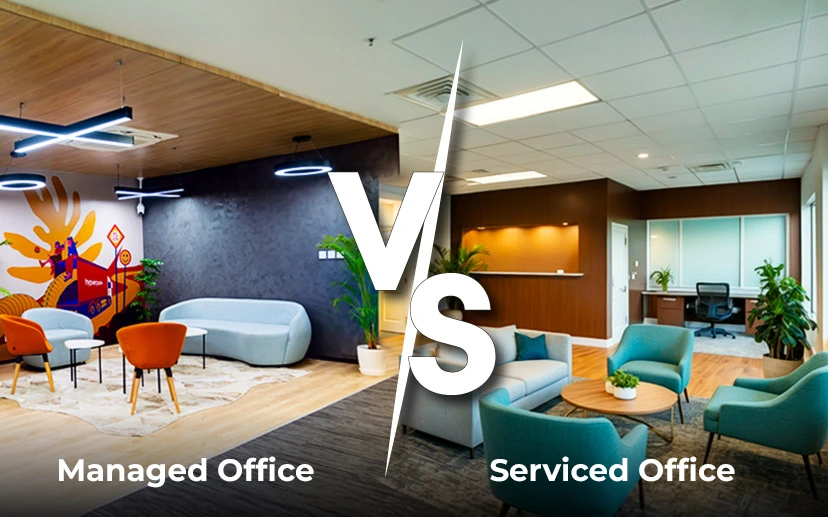


Businesses today increasingly compare serviced office vs managed office space options as flexible workspace models become a practical alternative to long-term commercial leases. Many companies prefer not to commit large capital to office fit-outs or multi-year leases before they fully understand how their teams will grow or how quickly operations will scale.
The shift toward flexible offices is visible across global companies entering India. According to JLL , India now hosts more than 2,000 Global Capability Centres employing nearly 1.9 million professionals, and many of these organisations evaluate flexible office models when setting up operations.
Both serviced offices and managed offices remove the burden of office setup, utilities, and day-to-day facility management. However, they differ in the level of control, customisation, and privacy they offer. Serviced offices typically provide ready-to-use workspaces within shared environments, while managed offices deliver dedicated office infrastructure designed for a single organisation.
Understanding these differences helps leadership teams select a workspace strategy aligned with operational priorities, employee experience, and long-term expansion plans.
What Is Managed Office Space?
A managed office space is a fully serviced workspace designed specifically for one organisation. The third-party provider manages infrastructure, maintenance, and daily operations while the business occupies a private, dedicated office tailored to its team size and workflow.
This makes managed offices particularly well-suited for enterprises establishing GCC operations, companies expanding regional teams, or organisations that need branded, private workspaces without committing to a traditional long-term lease.
What Is Serviced Office Space?
A serviced office is a ready-to-use workspace located within a shared office facility where multiple businesses operate. Companies typically rent private office cabins or desks while sharing meeting rooms, reception services, internet connectivity, and common facilities with other organisations in the building.
One of the advantages of serviced offices is the community environment. Working alongside different companies often creates networking opportunities, collaboration potential, and informal knowledge exchange that many startups and independent teams find valuable.
Serviced Office vs Managed Office: Key Differences
To understand how they compare in real business situations, the following differences are worth considering.
Office Setup and Customisation
Serviced offices are fully furnished and standardised, allowing businesses to move in quickly without worrying about setup. Managed offices, on the other hand, allow organisations to customise layouts , infrastructure, and seating arrangements based on operational needs.
Contract Length and Commitment
Serviced offices typically operate on short-term agreements, often monthly or quarterly. This structure allows companies to adjust workspace requirements quickly.
Managed offices generally involve medium-term agreements ranging from 12 to 36 months, which still remain more flexible than traditional commercial leases that often extend five years or longer.
Branding and Personalisation
Brand identity matters for growing companies. Serviced offices generally limit branding because the facility is shared among multiple tenants. Managed offices provide the freedom to incorporate company branding, signage, and custom interiors.
Cost Structure and Budget Control
Serviced offices usually charge per desk or per seat, which works well for smaller teams. Managed offices operate on a dedicated space model, offering clearer cost predictability for larger teams as the business grows.
Move-In Time and Readiness
Serviced offices allow almost immediate occupancy since everything is already configured. Managed offices may require some initial setup or design customisation before teams move in.
Facilities and Services Included
Both models include amenities such as high-speed internet connectivity, meeting rooms, reception support, utilities, ergonomic furniture, cleaning services and facility maintenance. The difference lies in exclusivity. Managed offices structure these services around one organisation, while serviced offices share them across multiple businesses.
The difference lies in exclusivity. Managed offices structure these services around a single organisation's operational needs, offering stronger security controls and data privacy, while serviced offices share facilities across multiple companies.
Ideal Business Size and Use Cases
Serviced offices are the right fit for freelancers, startups, hybrid teams, and remote workers who prioritise flexibility above all else.
Managed offices are designed for growing companies, enterprises , and GCCs that require dedicated infrastructure, privacy, and the ability to scale operations on their own terms.
Pros and Cons of Serviced Office and Managed Offices
Both workspace models serve different business needs. Understanding their advantages and limitations helps organisations select the right option.
Serviced Office
Pros
· Quick setup and immediate move-in
· Lower upfront financial commitment
· Flexible short-term contracts
· Access to shared amenities and networking opportunities
Cons
· Limited control over workspace layout
· Restricted branding options
· A shared environment may reduce privacy
· Less suitable for larger or confidential operations
Managed Office
Pros
· Dedicated workspace for a single organisation
· Full control over office design and branding
· Higher privacy and a stronger security environment
· Easier scalability for growing teams
Cons
· Slightly higher commitment compared to serviced offices
· Some initial planning is required for layout customisation
· May involve longer contract terms than coworking or serviced spaces
Choosing Between Managed and Serviced Offices
The choice between a serviced office and a managed office ultimately depends on the organisation's size, budget, and workspace requirements. Serviced offices work well for smaller teams that prioritise flexibility and quick setup, while managed offices are more suitable for companies that require dedicated space, privacy, and the ability to customise their work environment.
Businesses evaluating serviced office vs managed office solutions should consider their growth trajectory, operational structure, and employee experience goals before deciding.
Providers such as Incuspaze offer managed office spaces across major Indian business hubs, including Gurgaon, Mumbai, Bangalore, Indore, and Lucknow, supporting companies that need scalable, fully managed workplaces. These offices allow organisations to establish professional environments quickly while maintaining flexibility as operations expand.

FAQs on Serviced Office vs Managed Office
Businesses often compare serviced and managed offices when evaluating flexible workspace options. Here are answers to some common questions.
Which option is better for startups?
Serviced offices are usually better suited for startups because they offer flexible contracts, lower upfront costs, and ready-to-use workspaces. This allows young companies to establish a presence quickly while adjusting office requirements as their teams grow.
Which office type offers more flexibility?
Serviced offices generally offer greater flexibility due to shorter rental agreements and shared workspace structures. Businesses can easily scale up or down without long-term commitments, making them suitable for teams with uncertain growth patterns.
Which one is quicker to move into?
Serviced offices typically allow faster move-ins since the workspace is already furnished and operational. Managed offices may require some customisation or layout adjustments before occupancy, which can slightly extend the setup timeline.
Do managed offices offer the same facilities as serviced offices?
Yes, managed offices provide most of the same facilities, including internet connectivity, meeting rooms, utilities, maintenance, and administrative support. The key difference is that these services are structured around a single organisation rather than shared among multiple tenants.
Which is better for a GCC, a managed office or a serviced office?
For most Global Capability Centres (GCCs), managed offices are often the preferred option. GCC teams typically require dedicated infrastructure, strong security controls, customised layouts, and the ability to scale teams quickly. Managed office environments provide these capabilities while still avoiding the long setup timelines and capital investment required for traditional leased offices.