




Introduction
Setting up teams across multiple Indian cities sounds straightforward until you're actually doing it. A traditional office lease takes months to negotiate, costs significant capital to fit out, and locks you in for three to nine years before a single employee has walked through the door. That's a lot of commitment for a business environment that changes faster than lease terms allow.
According to JLL, India's flex space segment captured 19.8% of the country's annual office leasing in 2024 , its highest-ever share, while GCCs alone leased approximately 28 million sq. ft during the year. That's not a trend on the margins; that's a structural shift in how serious businesses think about workspace.
And here's the thing: companies today don't have to choose between being in Bengaluru or Delhi NCR, between speed and quality, between flexibility and a professional setup. This article breaks down why the single fixed HQ model is changing, what the alternative looks like, and how businesses are expanding across India without the old headaches.
How Office Models Are Evolving for Modern Businesses
The traditional approach to opening an office in a new city was never efficient. It was just the only option.
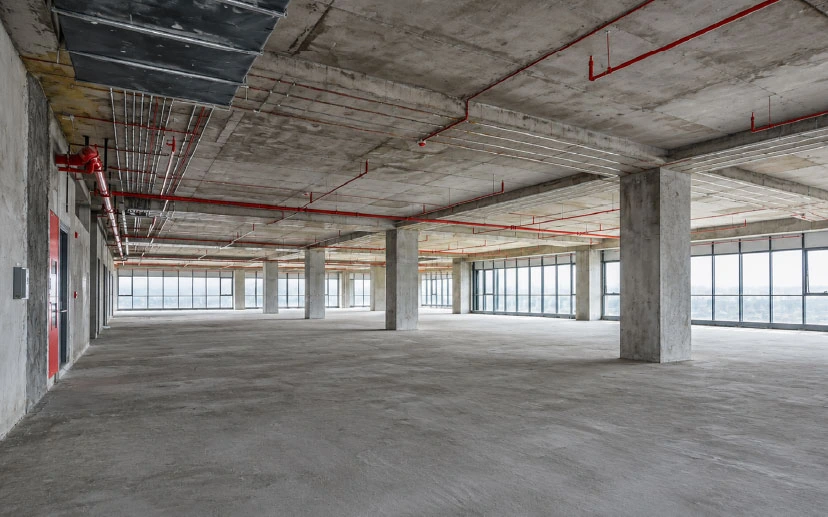
Traditional office spaces typically come with lease commitments of three to nine years, months of fit-out time before teams can actually move in, and capital expenditures that hit the balance sheet before the business has proved the location out. For a GCC leader setting up a second or third India hub or a founder trying to establish operations in a new city, every new office felt like launching a separate project.
The dilemma is real: you need to be in multiple cities to access talent, serve clients, and build scale, but the traditional model makes each new city feel like an enormous undertaking. That is where managed office solutions change the equation, removing the cost, time, and commitment that traditional setups demand.
Why Multi-City Presence Is Essential for Business Growth in India
India's talent isn't concentrated in one city. It never was.
The engineers, finance professionals, and operations talent that global companies need are spread across Bengaluru,Hyderabad,Pune, Chennai, Delhi NCR, and increasingly in Tier-2 cities like Lucknow, Indore, and Kochi, where hiring costs are lower, and attrition tends to be more manageable. A company that restricts its hiring to a single city isn't just limiting headcount growth; it's handing a competitive advantage to whoever's willing to operate across multiple markets.
The GCC story makes this even clearer. As of December 2024, there were over 1,950 GCC units in India, accounting for more than one-third of the occupied office stock in the top seven markets, and roughly 70% of Global 500 companies had yet to establish a presence. The runway for GCC expansion is long, and the companies moving fastest are the ones that can enter a new city quickly, without starting from scratch each time.
Enterprise demand has skyrocketed, with a record 183,200 seats leased to businesses in 2024 - a 9.2% year-on-year increase as flex solutions are being evaluated and demanded when occupiers plan their real estate strategies. That's enterprise-scale demand for managed space, not startups filling hot desks.
As of December 2024, there were over 1,950 GCC units in India , accounting for more than one-third of the occupied office stock in the top seven markets. Yet roughly 70% of Global 500 companies (excluding India-headquartered firms) had yet to establish a presence. The runway for GCC expansion is long, and the companies moving fastest are the ones that can enter a new city quickly, without starting from scratch each time.
Enterprise demand for flex space hit a record 183,200 seats leased to businesses in 2024, a 9.2% year-on-year increase, as flex solutions are being evaluated and demanded when occupiers plan their real estate strategies. (JLL) That's enterprise-scale demand for managed space, not startups filling hot desks.
What HQ Anywhere Actually Means for a Business
HQ Anywhere is a simple idea: a company can set up offices in any city without rebuilding its workspace strategy from zero each time.
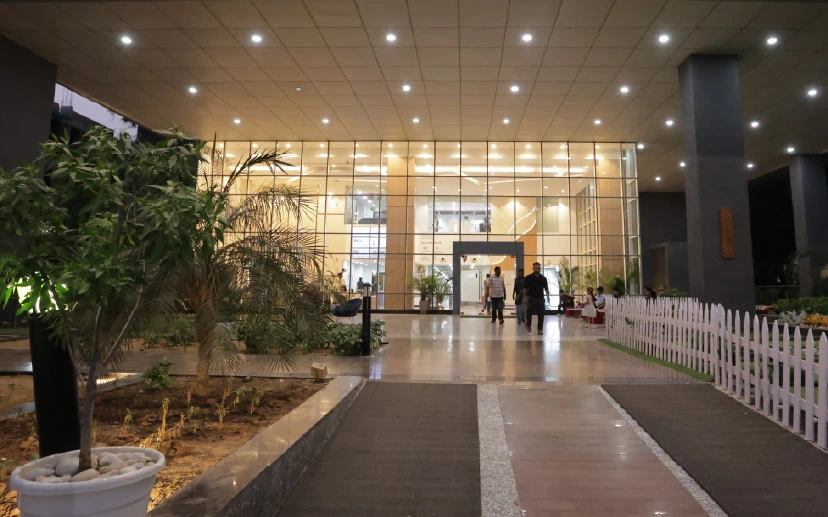
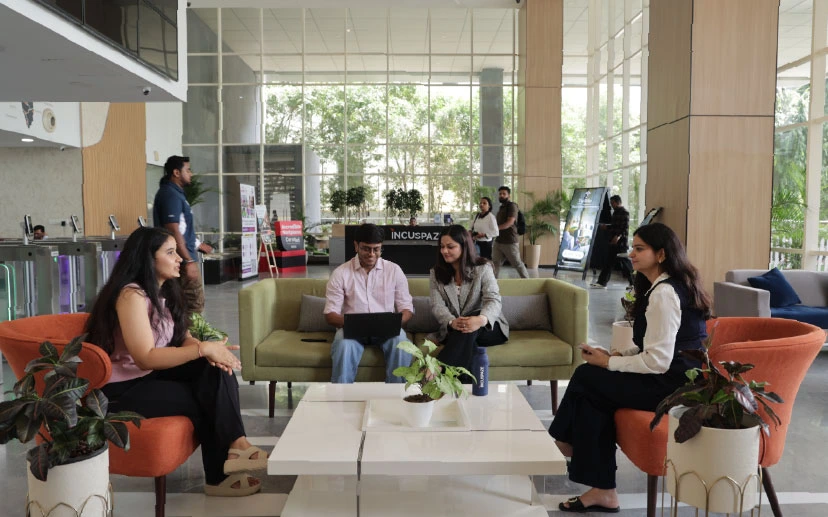
It doesn't mean no headquarters. It means the flexibility to operate from multiple locations with the same experience in each one. A company based in Delhi NCR can open a fully equipped, move-in-ready office in Bengaluru within weeks. Teams in Chennai and Pune work from spaces with consistent IT infrastructure, meeting rooms, admin support, and security standards matching what they'd find at every other location across Incuspaze's 50+ centre network.
No months of fit-out. No multi-year lease commitment upfront. Incuspaze handles the infrastructure, the facility management, and day-one operations so your team walks in ready to work, not ready to manage a build-out.

How Incuspaze Enables Your HQ Anywhere Strategy
Successful businesses today don't grow by going deeper in one city; they grow by expanding faster across many. The goal is to scale without the complexity that usually comes with it.
Incuspaze's managed office spaces are built for exactly that. With 50+ locations across 18 cities, Incuspaze handles everything from site search and lease to design, build, and day-to-day operations so your leadership team focuses on the business, not the building. Brand consistency is maintained across every location. Employee experience - amenities, IT, support, and facility management stay uniform whether your team is in Mumbai or Hyderabad.
If your business is expanding across India and you're tired of each new city feeling like a standalone project, Incuspaze's HQ Anywhere approach is worth exploring. The infrastructure is already in place. You just have to show up.