

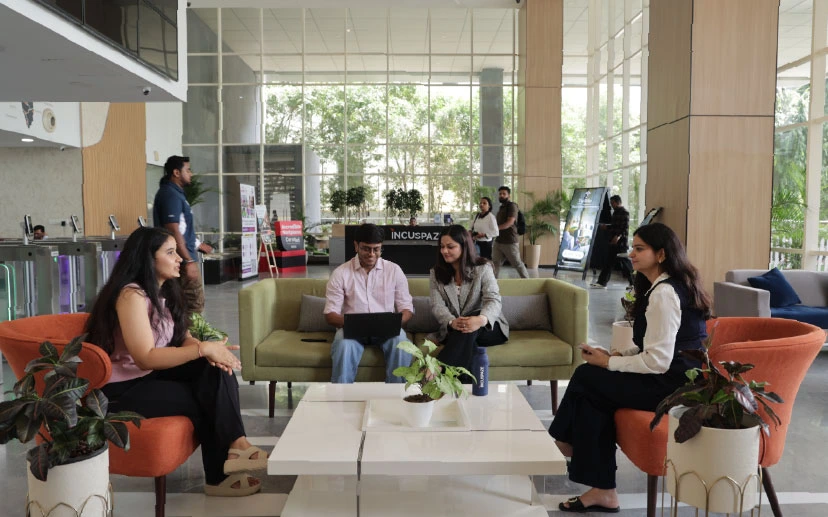


Introduction
India's flexible workspace market is entering a period of rapid expansion. According to Colliers India, flex workspace stock across the country's top seven cities is expected to surpass 100 million sq. ft. by 2027, up from 72.3 million sq. ft. in 2025.
With more options comes a harder decision: choosing a workspace that aligns with your business needs. Beyond location and pricing, factors such as amenities, flexibility, contract terms, and workplace experience can influence productivity and employee satisfaction.
This guide explains how to choose a coworking space in India, covering the 10 essential factors to weigh before you commit, the mistakes that cost teams money, and the questions to ask before you sign.
What Is Coworking Space?
A coworking space is a professionally managed workplace where freelancers, startups, and enterprise teams work under flexible membership plans. Instead of leasing and managing an entire office, you can simply choose a desk, cabin, or workspace that fits your needs.
Unlike a traditional office, essential infrastructure such as internet, meeting rooms, security, and reception is included. This eliminates the setup work and ongoing maintenance responsibilities of managing an office.
Common formats include hot desks, dedicated desks, private cabins, and team suites, each covered in the next section.
Key Factors to Evaluate When Choosing a Coworking Space
Choosing the right space comes down to a handful of practical factors. Here are the 10 that matter most.
Location and Accessibility
Location directly influences your team's commute, punctuality, and accessibility for clients. Look for easy access to metro stations, bus stops, parking, and nearby dining options.
For client-facing businesses, a central business district can also enhance your professional image. A practical approach is to map where most of your team lives and choose a location that keeps the average commute manageable.
Type of Workspace You Need
Coworking spaces come in a few standard formats. A hot desk is any open seat on a flexible basis. A dedicated desk is a fixed spot reserved just for you. A private cabin is a closed office for small teams. A team suite is a self-contained area sized for one full team. Meeting rooms sit alongside all of these and are bookable on demand.
Each format suits a different kind of user. Hot desks work well for solo professionals or visiting teams. Dedicated desks fit people who sit in the same spot daily.
Private cabins suit small teams that want privacy and presence. Managed offices work best for teams of roughly 20 people and above. Match your plan to how your team works right now.
Essential Amenities and Infrastructure
Some amenities are essential for a smooth and productive workday. Look for reliable high-speed Wi-Fi with backup connectivity, power backup, ergonomic seating, well-equipped meeting rooms, and a comfortable pantry. These may seem like small details, but they can have a noticeable impact on your team's productivity and overall work experience.
Support services are equally important. Check whether the space offers reception support, mail handling, IT assistance, and housekeeping. If your team works flexible or extended hours, 24/7 access can also be valuable.
Before signing up, clarify which amenities are included in the base price and which come at an additional cost. This helps you avoid unexpected expenses later.
Pricing Transparency and Hidden Costs
A low base price rarely tells the full story. Add-on fees often show up later on your invoice. Before signing, ask about meeting room hours included per month. Also check printing limits, courier handling, parking, and after-hours access. Guest passes and pantry consumption charges add up quickly too.
Request a full monthly cost estimate based on expected usage. Don't rely on the headline price alone. Compare 2-3 shortlisted spaces using the same usage assumptions. This gives you a fair comparison.
If you want a like-for-like quote to benchmark your shortlist against, you can request one for any Incuspaze coworking space and compare it on the same usage assumptions.
Here is how the three common provider tiers compare on price and inclusions.
| Provider Tier | Base Price (per seat/month) | Included Amenities | Common Add-ons | Estimated Total Monthly Cost |
|---|---|---|---|---|
| Budget / Peripheral Location | ₹5,000-₹9,000 | Wi-Fi, power backup, 2 meeting hrs | 18% GST, printing, extra meeting hrs | ₹6,500-₹11,500 |
| Mid-Range / CBD | ₹9,000-₹15,000 | Wi-Fi, power backup, pantry, 4 meeting hrs | 18% GST, parking, courier, guest passes | ₹11,500-₹19,000 |
| Premium / Prime Business District | ₹15,000-₹25,000 | Wi-Fi, power backup, unlimited meeting rooms, dedicated support | 18% GST, parking, F&B, event access | ₹19,000-₹31,000 |
Flexibility and Scalability
Team sizes shift quickly, and rigid contracts get expensive fast. Being locked into an 11-month plan can hurt when your team grows. Before signing, check the minimum lock-in period. Also confirm the notice period for exit and seat flexibility. If your team spans cities, ask about multi-location access too.
This flexibility is shaping India's office market at large. Flexible space operators were the single largest occupier segment in Q2 2026, taking a 27% share of national office leasing.
Flex, technology and BFSI firms together drove close to 63% of that quarter's leasing, according to CBRE. Read the lock-in and exit clauses closely before you sign.
Community and Networking Opportunities
The people around you matter as much as the space. A well-curated community can open doors to clients and hires. Look for regular events like meetups, workshops, or founder dinners.
A healthy mix of industries among members also helps. Shared lounges and breakout rooms also encourage informal collaboration. Ask the operator about their member profile and event frequency.
Privacy and Data Security
Shared spaces bring shared risks, so security deserves close attention. Check access control, CCTV coverage, and visitor logs carefully. Also confirm secure entry to private cabins and meeting rooms. On the digital side, look for segmented Wi-Fi networks. Secure guest access and optional VPN support matter too.
If you handle sensitive data, privacy during calls matters even more. This applies to finance, legal, healthcare, and tech businesses especially.
Look for soundproof meeting rooms and dedicated phone booths. Check for enough spacing between desks as well. Ask the operator how they manage data security day-to-day. For regulated teams, go further: ask whether the operator holds an ISO 27001 certification, and whether they will sign an NDA covering the staff who have floor access.

Atmosphere and Work Environment
The feel of a space affects daily focus more than expected. Some spaces run quiet and library-like in style. Others buzz with social energy throughout the day. During a visit, evaluate the noise level and natural lighting.
Also check seating comfort, ventilation, and overall cleanliness. Consider whether the design looks professional enough for client visits. The right atmosphere should match how your team actually works. Engineering teams often need quiet zones to focus. Sales teams, on the other hand, thrive in open areas.
Contract Terms and Membership Plans
Your contract decides what happens as circumstances change over time. This includes team growth, seat reduction, or a full move-out. Before signing, read the lock-in period and notice period carefully.
Also check the security deposit terms, the refund timeline, and whether the deposit is held against rent or against damages. Review the escalation clause and standard payment terms too.
Clarify whether seats can be paused or transferred easily. Confirm whether upgrades come without any extra penalty.
Sustainability and Building Credentials
Green building credentials have moved from a nice-to-have to a screening criterion, particularly for enterprises and GCCs that report on ESG. Ask whether the building holds a LEED or IGBC rating, how energy and water use are managed, and whether the operator can share consumption data for your seats.
CBRE reports that occupiers are now weighing quality, sustainability and flexibility in equal measure, with green-certified assets continuing to dominate leasing, according to CBRE. If your parent company reports on emissions, the building you sit in ends up inside that report.
Common Mistakes to Avoid When Choosing a Coworking Space
Even experienced teams make avoidable errors when picking a space. Watch out for these common pitfalls:
- Choosing a space only because it has the lowest price
- Ignoring how the team might grow over the next year
- Skipping the in-person site visit before signing
- Overlooking the daily commute for the wider team
- Missing hidden costs and add-on fees in the contract
- Signing without reading the lock-in and exit clauses
- Assuming every space offers the same flexibility and amenities
Careful evaluation now avoids high costs and unnecessary disruption down the road.
Why Choose Incuspaze for Your Coworking Office Space
The right coworking space supports how your team works today. It should also adapt as your business grows tomorrow. Incuspaze operates managed and coworking workspaces across 18+ Indian cities. It offers the coworking office space businesses actually look for.
Incuspaze stands out through prime locations and ready-to-use setups. This includes private cabins, dedicated desks, and reliable infrastructure.
Power backup, high-speed Wi-Fi, and equipped meeting rooms come standard. Flexible plans and dedicated on-site support round out the experience. Browse Incuspaze coworking spaces near you and book a walkthrough of the floor your team would actually sit on.
Frequently Asked Questions on Choosing a Coworking Space
Here are quick answers to the questions people ask most.
How much does a coworking space cost in India?
Pricing typically ranges from ₹5,000 to ₹25,000 per seat monthly. Metro cities and premium locations sit at the higher end. Always confirm what's included in the base price first.
What is the difference between a coworking space and a managed office?
A coworking space offers shared, flexible seating within a common facility. A managed office is a dedicated, customised space for one company. It offers more privacy and stronger branding control.
Is a coworking space suitable for a team of two or three people?
Yes, small teams benefit greatly from coworking spaces. You avoid the overhead of running your own office. You still get professional infrastructure and a scalable setup as you grow.
How long is a typical coworking membership commitment?
Commitments range from month-to-month plans to 11-month lock-ins. This depends on the provider and the seat type chosen. Shorter terms usually cost more per seat each month.
How long does it take to move into a coworking space?
Most coworking spaces allow move-in within a few days. This is far faster than a traditional office setup. Traditional offices can take months to fit out and furnish.
What should I check during a coworking space site visit?
Visit at the busiest hour, not a quiet one. Test the Wi-Fi speed yourself, check noise levels near the desks you would take, look at the state of the washrooms and pantry, and ask to see a meeting room during a live booking. Also count how many people are actually in the space.
Do coworking space prices in India include GST?
Quoted seat prices are usually exclusive of GST, which is charged on top at the applicable rate. Ask for the all-in monthly figure, including GST and any recurring add-ons, before you compare two providers.